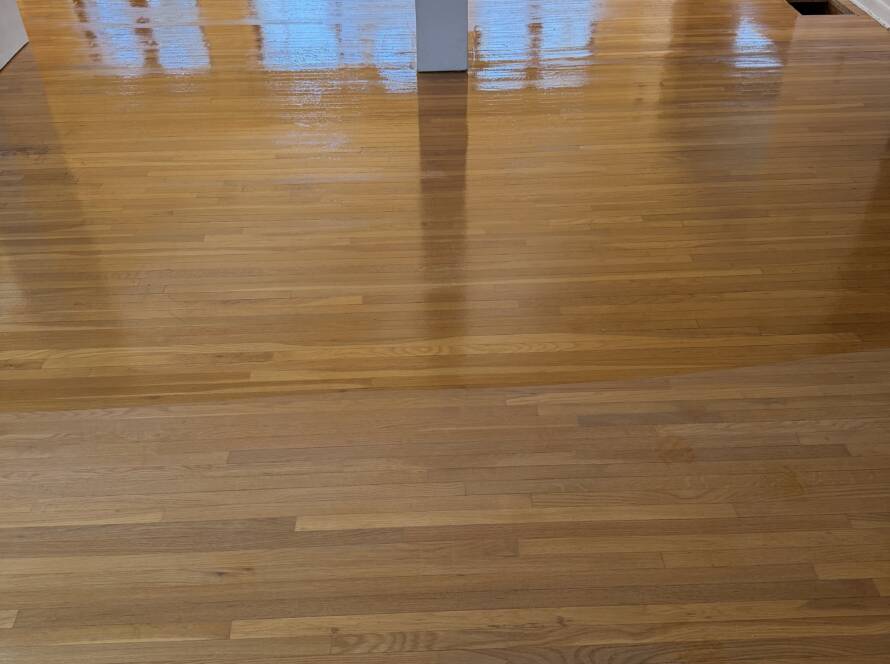
Stains in hardwood floors are one of the most common questions we get from homeowners across North Jersey. A white ring from a sweating glass, a dark spot where the dog had an accident, or a cloudy patch that won’t wipe away no matter how much you clean.
The good news is that many stains in hardwood floors can be fixed at home. The bad news is that some can’t, and the wrong DIY fix can make things worse.
In this guide, we’ll explain why stains keep showing up, walk through 7 easy DIY fixes, and help you decide when it’s time to call a pro.
[Insert Rank Math Table of Contents block here]
Why Do Stains Keep Showing Up in My Hardwood Floors?
If you’re dealing with stains in hardwood floors again and again, the problem usually isn’t the spill itself. It’s what’s protecting the wood, or what isn’t.
A Worn-Out Finish
Your hardwood is protected by a clear topcoat, usually polyurethane. That finish is what keeps liquids sitting on top of the floor instead of soaking in.
Over time, foot traffic, furniture and grit wear that layer thin. Once the finish is worn, spills soak into the wood faster and stains in hardwood floors become much more likely. High-traffic areas like kitchens, entryways and hallways usually go first.
Wax and Cleaner Buildup
Store-bought “shine” products and floor waxes promise a glossy look, but over time they leave a thick residue. That residue traps dirt, darkens the floor and creates dull, blotchy areas that look like stains.
Even regular cleaners can leave a film if they’re the wrong type for finished hardwood. The National Wood Flooring Association’s homeowner site recommends using cleaners made specifically for your floor’s finish, and avoiding oil soaps, wax and vinegar on polyurethane floors.
If your floors look worse right after you clean them, buildup is almost always the cause. Our wax removal service strips that residue away and reveals the true color underneath.
Pets
Pet accidents are one of the biggest causes of stains in hardwood floors. Urine is acidic and, if left too long, soaks through a worn finish and reacts with the wood, leaving dark gray or black spots.
Pet water bowls are another sneaky culprit. Small splashes every day can slowly create water stains on hardwood floors around feeding areas.
Too Much Water
Wet mopping and steam mops push moisture into seams and through tiny scratches in the finish. Over months, that leads to cloudy patches, dark edges along boards and even cupping.
North Jersey Winters
Snow, slush and road salt get tracked in from November through March. Salt leaves a white, chalky film, and melted snow by the front door is a common source of water stains on hardwood floors in Morris, Sussex, Passaic, Bergen and Warren County homes.
White Stains vs. Dark Stains: Know What You’re Dealing With
Before you try any fix, look closely at the color. This one test tells you a lot about stains in hardwood floors.
White or cloudy stains usually mean moisture is trapped in the finish, not in the wood. These are often fixable at home or with a professional recoat.
Dark or black stains usually mean liquid has gone through the finish and into the wood itself. These are much harder to fix and often need professional help.
7 Easy DIY Fixes for Stains in Hardwood Floors
Always test any fix in a hidden spot first, like inside a closet. Start gentle and only move to stronger methods if needed.
1. Hair Dryer for White Water Rings
Fresh white rings from cups or plant pots are moisture trapped in the finish. Set a hair dryer to low or medium and hold it a few inches from the spot, moving it back and forth. The moisture often evaporates and the ring fades within a few minutes.
2. Warm Iron and Cotton Cloth for Stubborn White Marks
If the hair dryer doesn’t work, place a clean, dry cotton cloth over the spot. Set an iron to low with the steam turned off, then press for a few seconds at a time and check your progress. Never leave the iron in one spot, as too much heat can damage the finish.
3. Mild Dish Soap for Grease and Food Spills
For cooking oil, butter and other kitchen spills, mix a few drops of dish soap into warm water. Dampen a soft cloth, wring it out well, wipe the area and dry it right away. Most surface stains in hardwood floors from food come up this way.
4. Rubbing Alcohol for Ink and Marker
Kids’ markers and pen ink usually sit on top of the finish. Put a small amount of rubbing alcohol on a cloth and dab the spot gently. Don’t pour it directly on the floor, and wipe the area with a damp cloth afterward.
5. Enzyme Cleaner for Fresh Pet Accidents
Blot fresh urine right away with paper towels; don’t rub. Then use an enzyme-based pet cleaner that is labeled safe for finished wood. Enzymes break down the odor-causing compounds before they soak deeper. If the spot has already turned dark, skip to the “call a pro” section below.
6. Tennis Ball or Baking Soda for Scuffs and Heel Marks
Black scuff marks from shoes often come off by rubbing them with a clean tennis ball. For tougher marks, a paste of baking soda and water on a soft cloth works. Use light pressure, since too much scrubbing can dull the finish.
7. A Proper Hardwood Cleaner for General Grime
Some “stains” are just built-up dirt in high-traffic areas. Switch to a pH-neutral cleaner made for finished wood floors, such as those from Bona, and use a lightly damp microfiber mop instead of a soaking wet one.
What NOT to Do When Treating Stains in Hardwood Floors
Some popular tips online can make stains in hardwood floors worse:
- Don’t use bleach. It can discolor wood and break down the finish.
- Don’t use vinegar on finished floors. It’s acidic and can dull polyurethane over time.
- Don’t sand spots yourself. Spot sanding almost always leaves a patch that doesn’t match the rest of the floor.
- Don’t add more wax or shine products. They hide the problem for a week and add to the buildup.
- Don’t use steam mops. Heat and moisture are two of the biggest enemies of hardwood.
- Be careful with wood bleach. Products with oxalic acid are sometimes used on dark stains, but they require removing the finish and can leave light patches. This is a job for a pro.
Signs Your Stains Need a Professional
DIY works well for fresh, surface-level marks. It’s time to call a pro when you see:
- Dark gray or black stains that didn’t come up with gentle cleaning
- Stains in hardwood floors that keep coming back in the same areas
- A cloudy, hazy or blotchy look across large parts of the floor
- Sticky or tacky spots, a sign of wax or cleaner buildup
- Gray, raw-looking wood where the finish has worn through
- Lingering odors, especially from pets
- Boards that are cupping, warping or soft, which can point to a moisture problem
Ongoing moisture can also lead to mold under or around flooring. The EPA’s mold guide explains why it’s important to fix the moisture source quickly.
How a Pro Fixes Stains in Hardwood Floors
Most homeowners assume stains in hardwood floors mean a full sanding and refinish. In many cases, that’s not true. At True Tone, we start with the least invasive option that will actually fix the problem.
Wax Removal
If buildup is causing dark, dull or blotchy areas, our wax removal service strips away years of residue and deep cleans the floor to reveal its original color.
Clean and Seal
For floors with surface staining, haze and light wear, our clean and seal service combines deep cleaning, mechanical buffing and a protective seal coat to bring the floor back to life.
Screen and Recoat
When the finish is worn but the wood is still in good shape, a screen and recoat lightly abrades the old finish and adds a fresh protective topcoat. It’s done in as little as one day, with far less dust and downtime than sanding. We also use low-odor finishes, which matters for indoor air quality; the EPA’s guide to VOCs explains why.
Not sure which one your floors need? We’ll take a look and tell you honestly, including when a stain has gone too deep for a surface treatment.

How to Prevent Stains in Hardwood Floors
Once your floors look great again, a few simple habits will keep them that way:
- Wipe up spills right away, especially water, pet accidents and wine
- Use coasters, plant saucers and mats under pet bowls
- Put entry mats at every door, especially during NJ winters
- Clean with a hardwood-safe, pH-neutral cleaner and a damp, not wet, mop
- Skip wax and “shine restorer” products
- Use felt pads under furniture
- Schedule a maintenance recoat every few years before the finish wears through
Protecting the finish is the single best way to prevent stains in hardwood floors. For more tips from flooring professionals, visit the National Wood Flooring Association. If you’re planning a bigger project, check out our guide to wood floor refinishing prep for North NJ homes.
Frequently Asked Questions
[Use the Rank Math FAQ block for this section so it gets FAQ schema]
Can stains in hardwood floors be removed without sanding?
Often, yes. White water marks, cleaner buildup and surface stains can usually be fixed with DIY methods or professional services like wax removal, clean and seal, or screen and recoat. Dark stains that have soaked into the wood may need more.
What causes dark stains in hardwood floors?
Dark stains usually mean liquid, often water or pet urine, has gone through the finish and into the wood. The longer it sits, the darker it gets.
How do you get water stains out of hardwood floors?
For white water stains on hardwood floors, try a hair dryer on low or a warm iron over a cotton cloth with no steam. Dark water stains usually need professional help.
Why do my hardwood floors look stained after mopping?
This is usually cleaner or wax buildup, or too much water. Switch to a hardwood-specific cleaner and a damp mop. If the haze stays, professional wax removal will clear it.
Do pet stains in hardwood floors come out?
Fresh accidents can usually be cleaned with an enzyme cleaner. Old, dark pet stains often go into the wood and need a professional assessment.
How much does it cost to fix stains in hardwood floors in NJ?
It depends on the type of stain and the size of the area. Surface treatments like screen and recoat cost a fraction of full refinishing. True Tone offers free estimates across North Jersey.
Get a Free Estimate for Stains in Hardwood Floors
If DIY hasn’t solved it, True Tone can help. We’re an owner-operated hardwood floor company serving Morris County, Sussex County, Passaic County, Bergen County and Warren County.
Most floors can look new again in as little as one day, without the cost and mess of full sanding. Get your free quote today or call or text 973-620-2356.